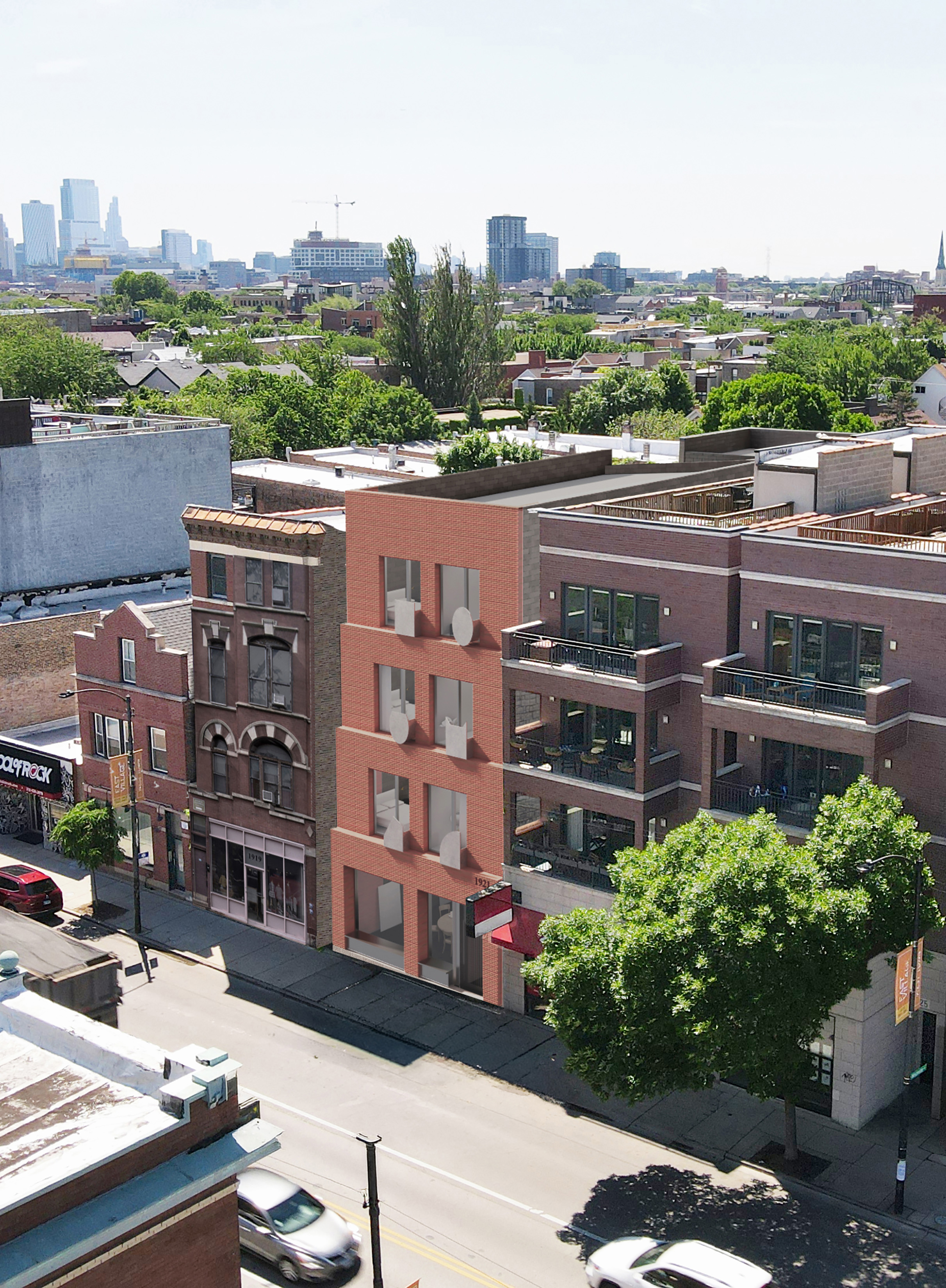
Chicago, Chicago is a three-flat with ground-floor commercial on Chicago Avenue that reworks the typology while building upon its history.

Chicago, Chicago
Three-Flat with Ground Floor Commercial Level
Chicago, Illinois
6,450 square feet
Undisclosed
Design Development
Kwong Von Glinow: Lap Chi Kwong, Alison Von Glinow, Eric Shichen Li, Jiachen Wang, Tianjiao Wang, Oana Giuglea, Jonah LaDuca, Botao Sun, Yue Liang, Nathan Geller, Zoey Kriethe, Samuel Bennett; Goodfriend Magruder Structure, MAP Strategies
Chicago, Chicago is a three-flat with commercial ground floor and basement, located on the commercial corridor of Chicago Avenue. The project distills and addresses the building and programmatic elements that form the historic type of the Chicago three-flat: from the entrance, to the stair core, to the unit layout, and the lightwell. Each element is crafted to address contemporary values of living and working in a city.
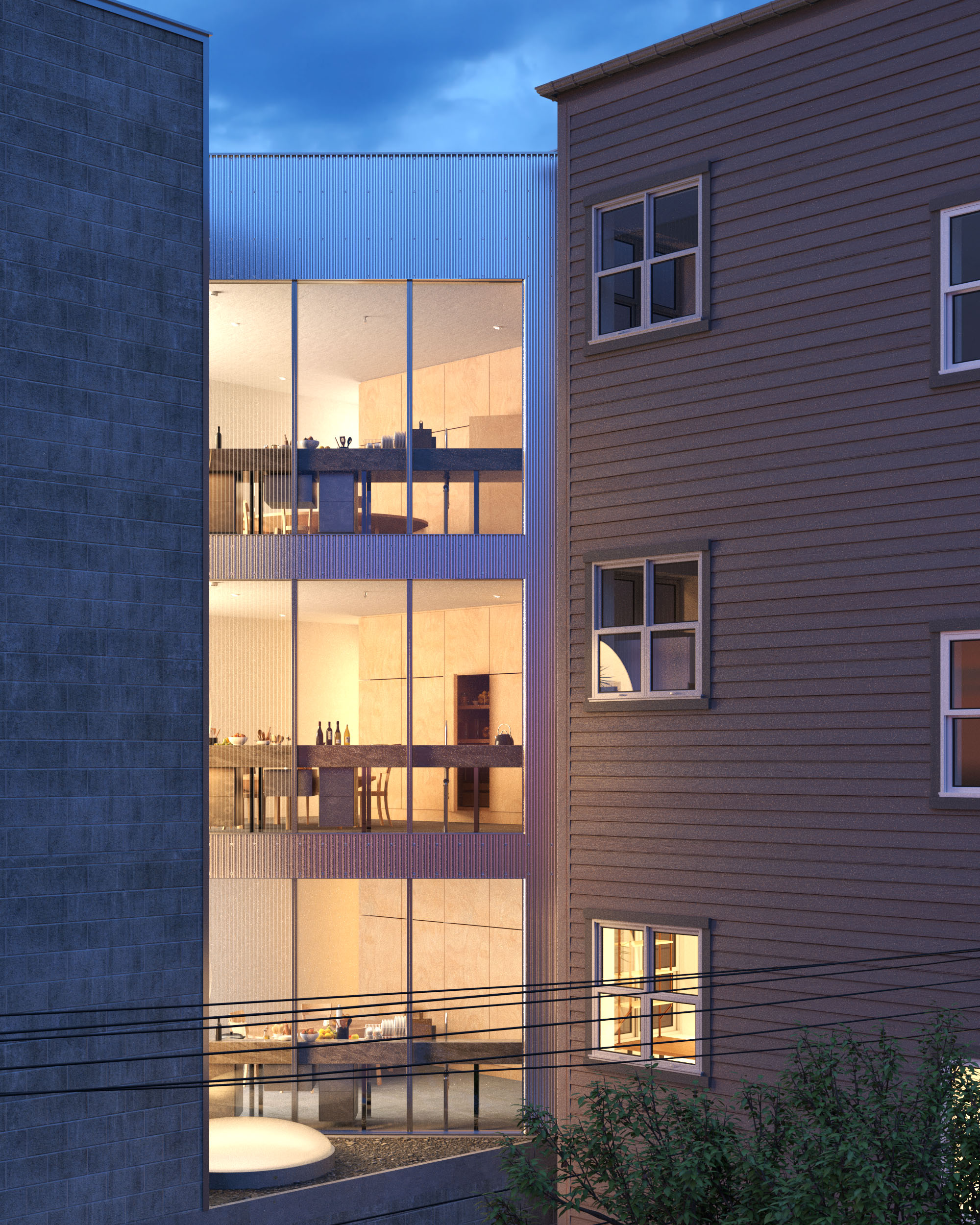
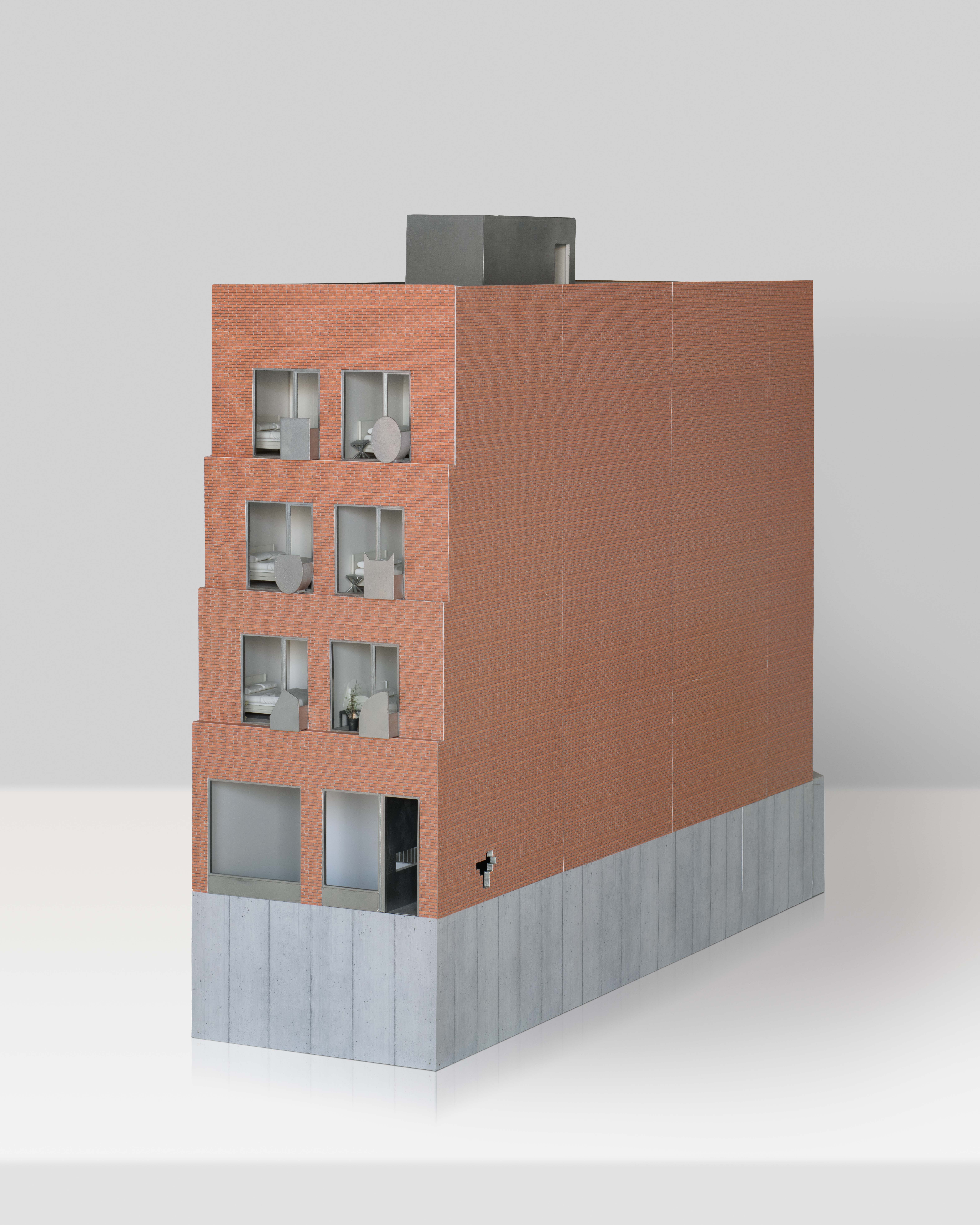
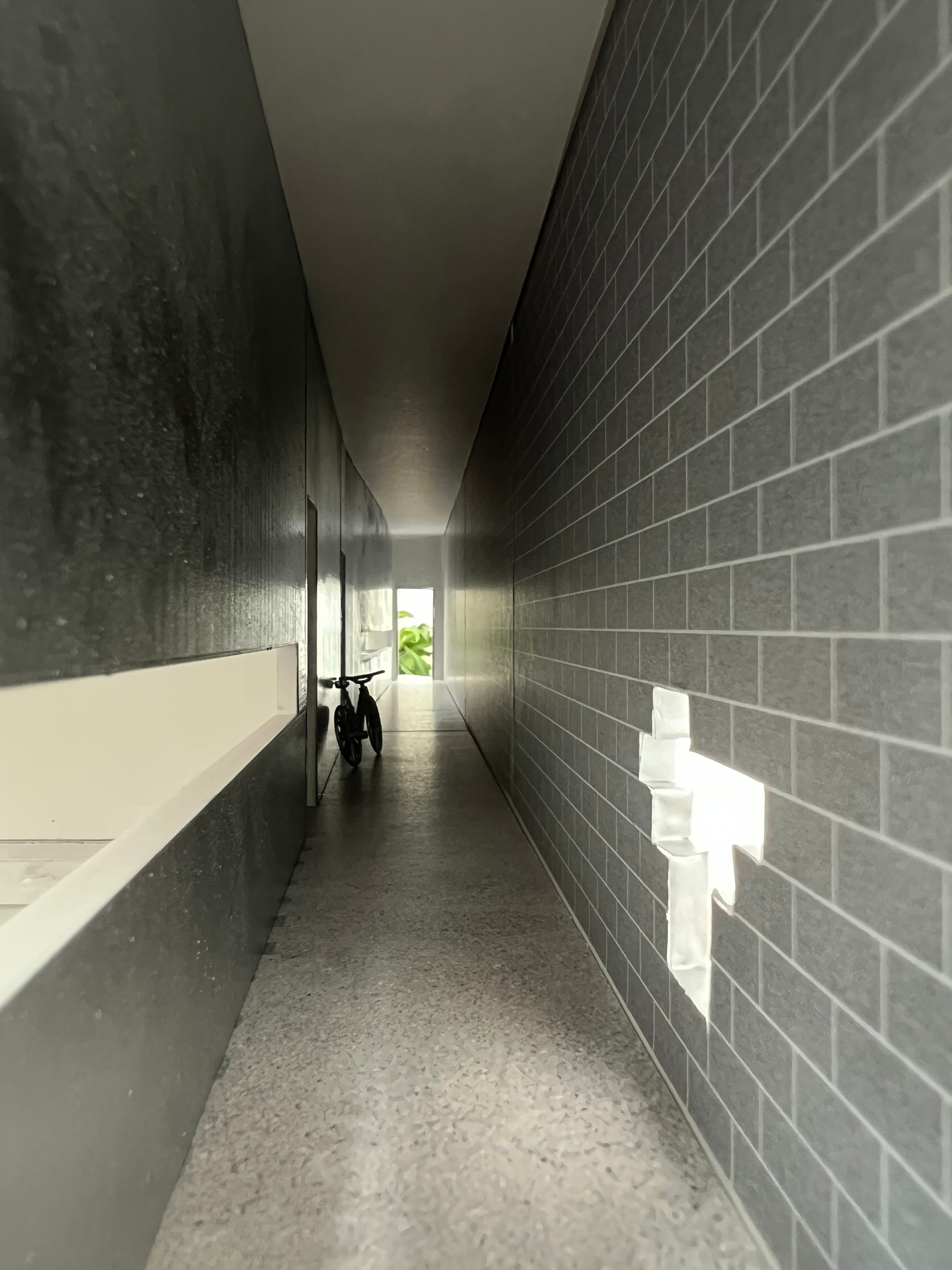
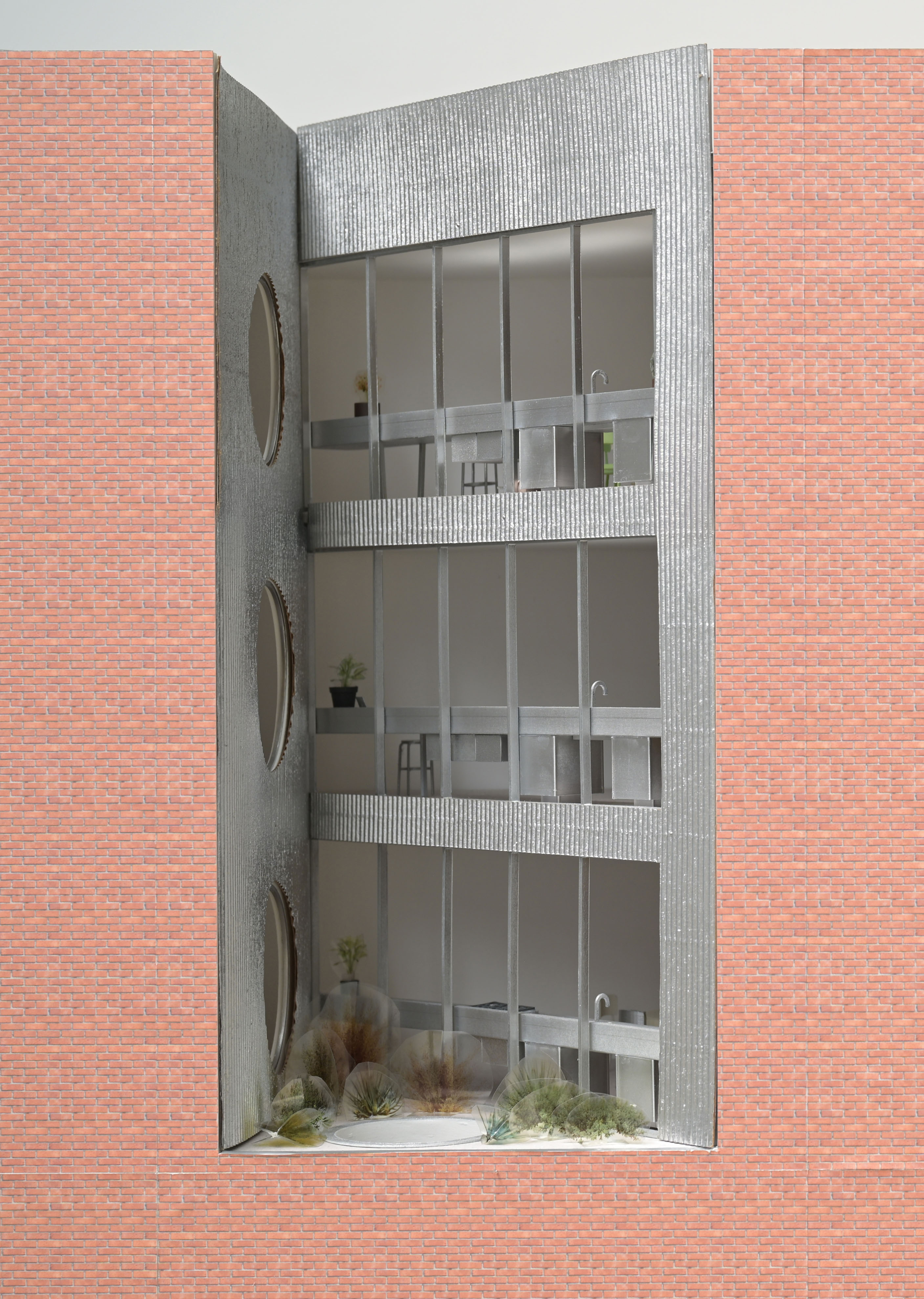
At the scale of the building, the three-flat reveals its program: at each level, the building steps back 1’-0” to emphasize the typology of three “flats” stacked one upon the other. Bedrooms are avenue-facing and articulated with a unique Juliette balcony, giving face to the rooms within. A widening open-air corridor bridges the front and back of the building at ground level, so that employees in the commercial unit can bike to the office and bring their bikes to the back through the open-air corridor. A large triangular-shaped atrium cuts into the three residential units to create a large lightwell that brings in plenty of light. This building-scale triangular atrium creates two new facades such that all spaces receive direct natural daylight and ventilation.
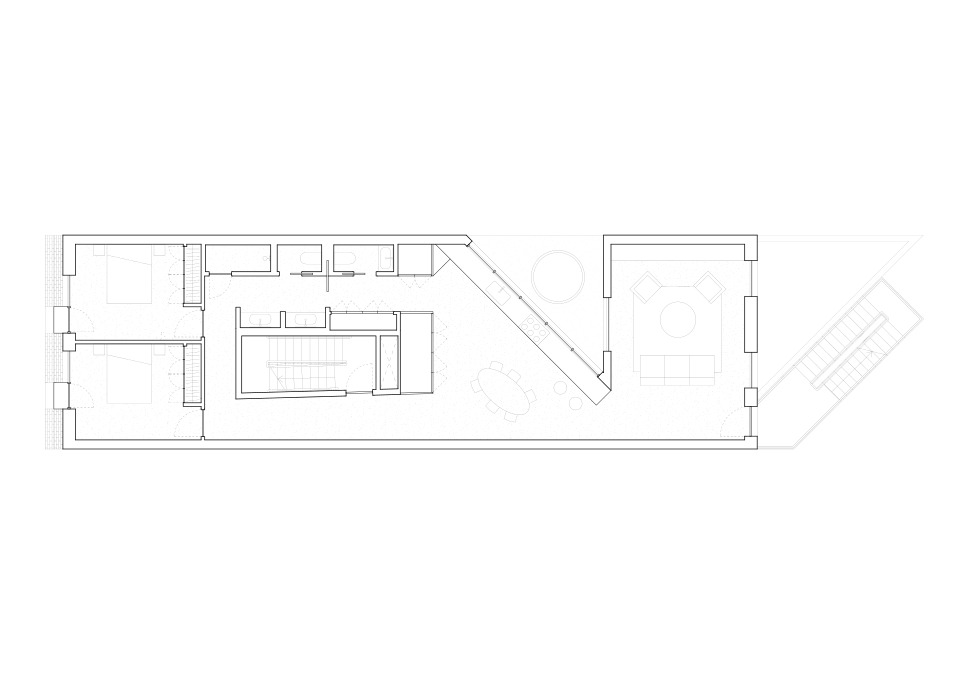
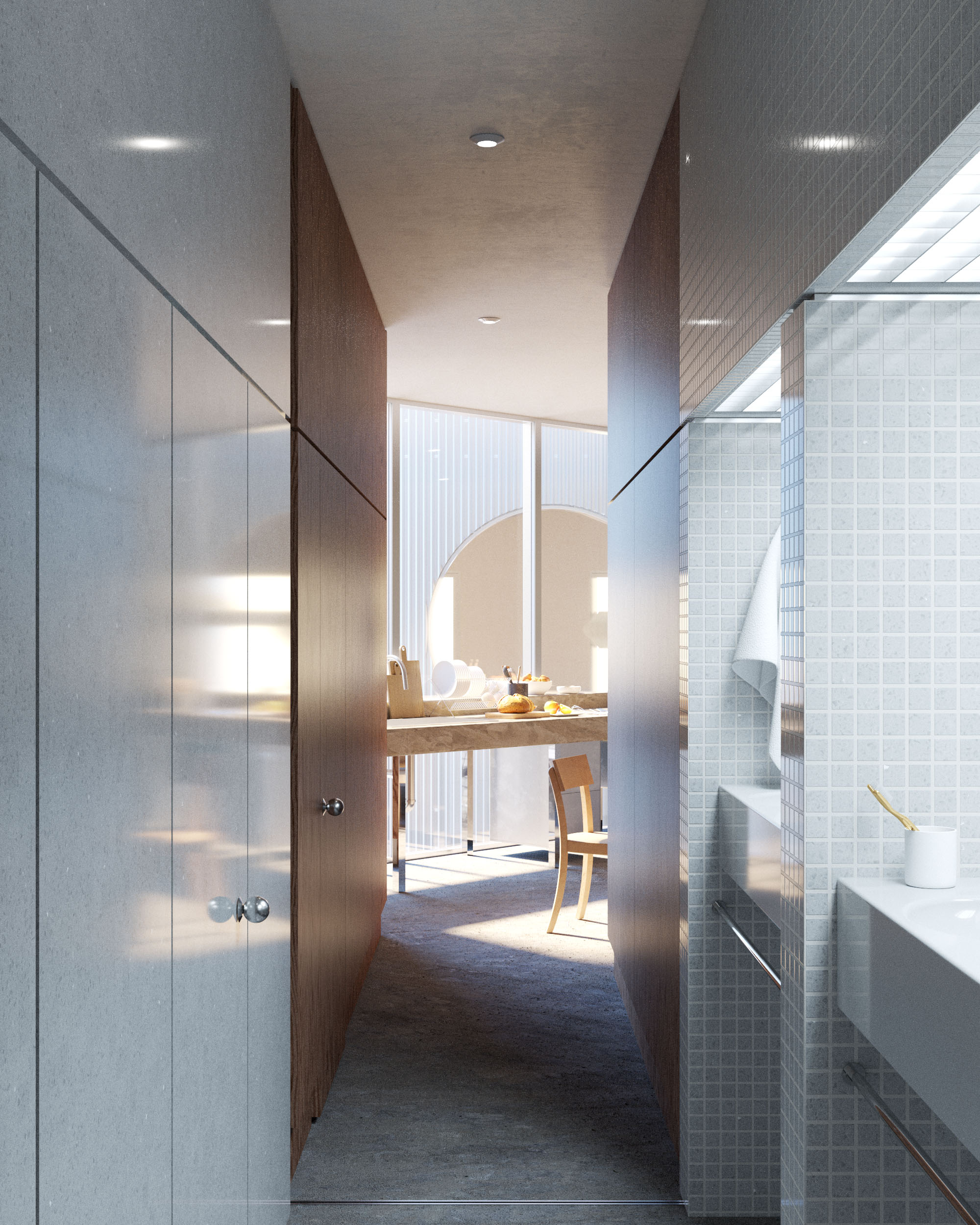
The residential units are laid out in such a way as to minimize enclosed rooms and rather prioritize shared open living space. Only two toilet rooms, a shower, and the two bedrooms are enclosed. Two vanities line an open corridor that connects the bedrooms and the kitchen, giving double function to this space. The kitchen counter lines the long edge of the triangular lightwell. The living room is defined by the façade of the lightwell with a large circular window and back façade of the building.
As a building type that has remained largely unchanged since its early codification in Radford Architectural Company builders’ guides of the early 1900s, we began by isolating and reconsidering the typology’s core elements.
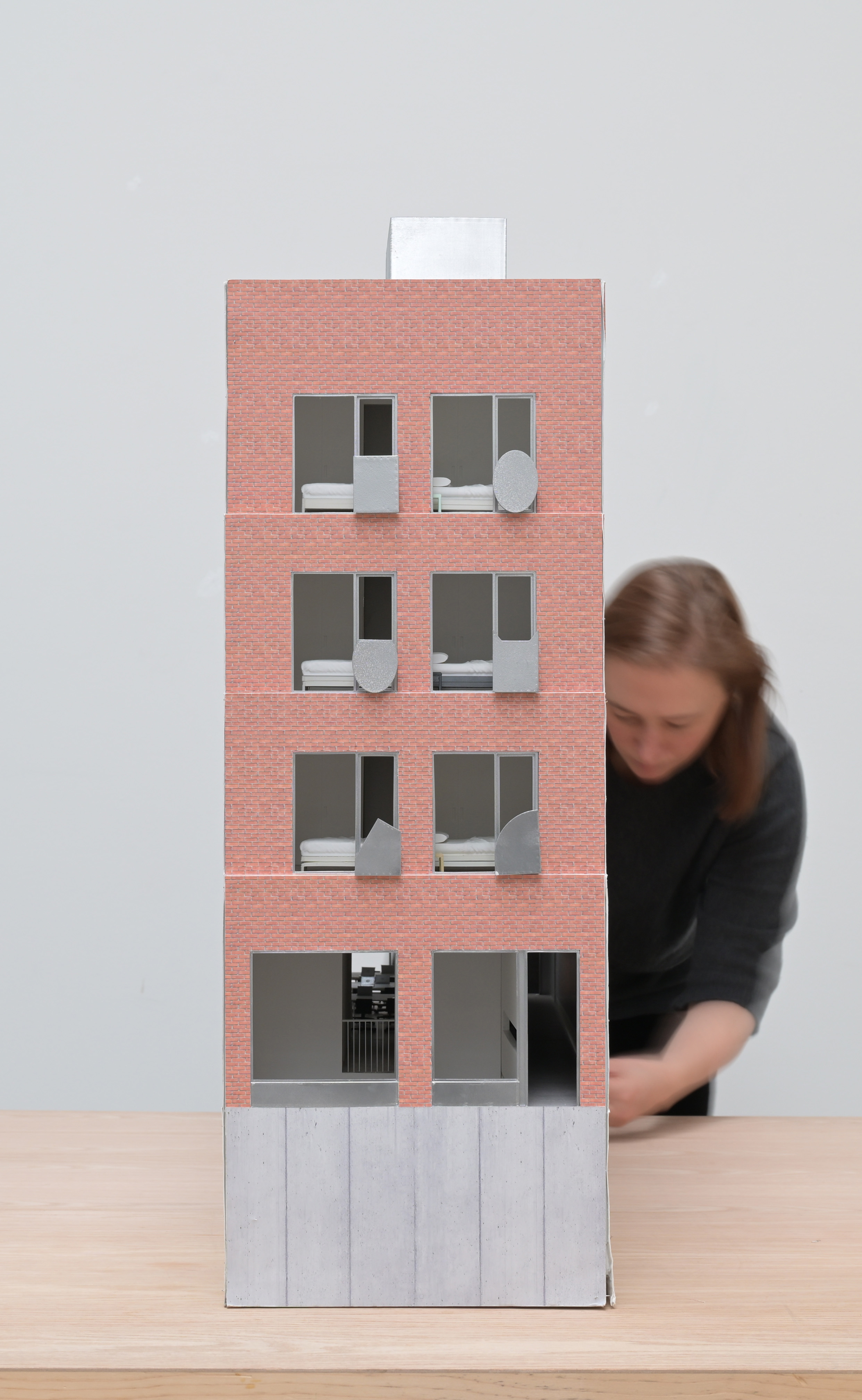
These core elements included the entrance, stair core, unit layout, and lightwell.
We found that plan variations reduce to three basic arrangements: bedrooms at the front, back, or middle of the unit, with living and dining occupying the remaining space.
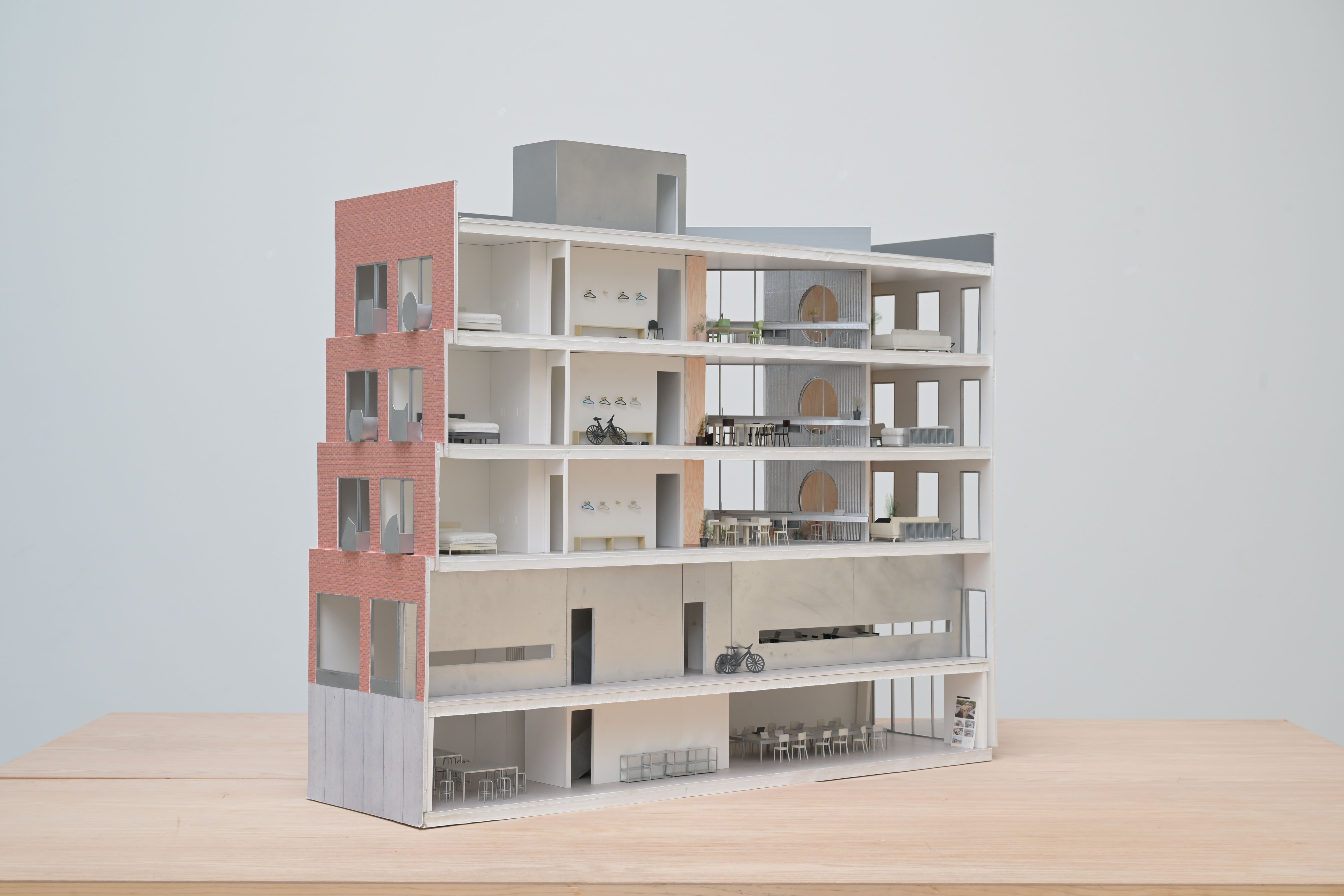
At the scale of the building, the three-flat expresses its organization directly: each level steps back one foot, emphasizing the vertical stacking of three “flat” units.

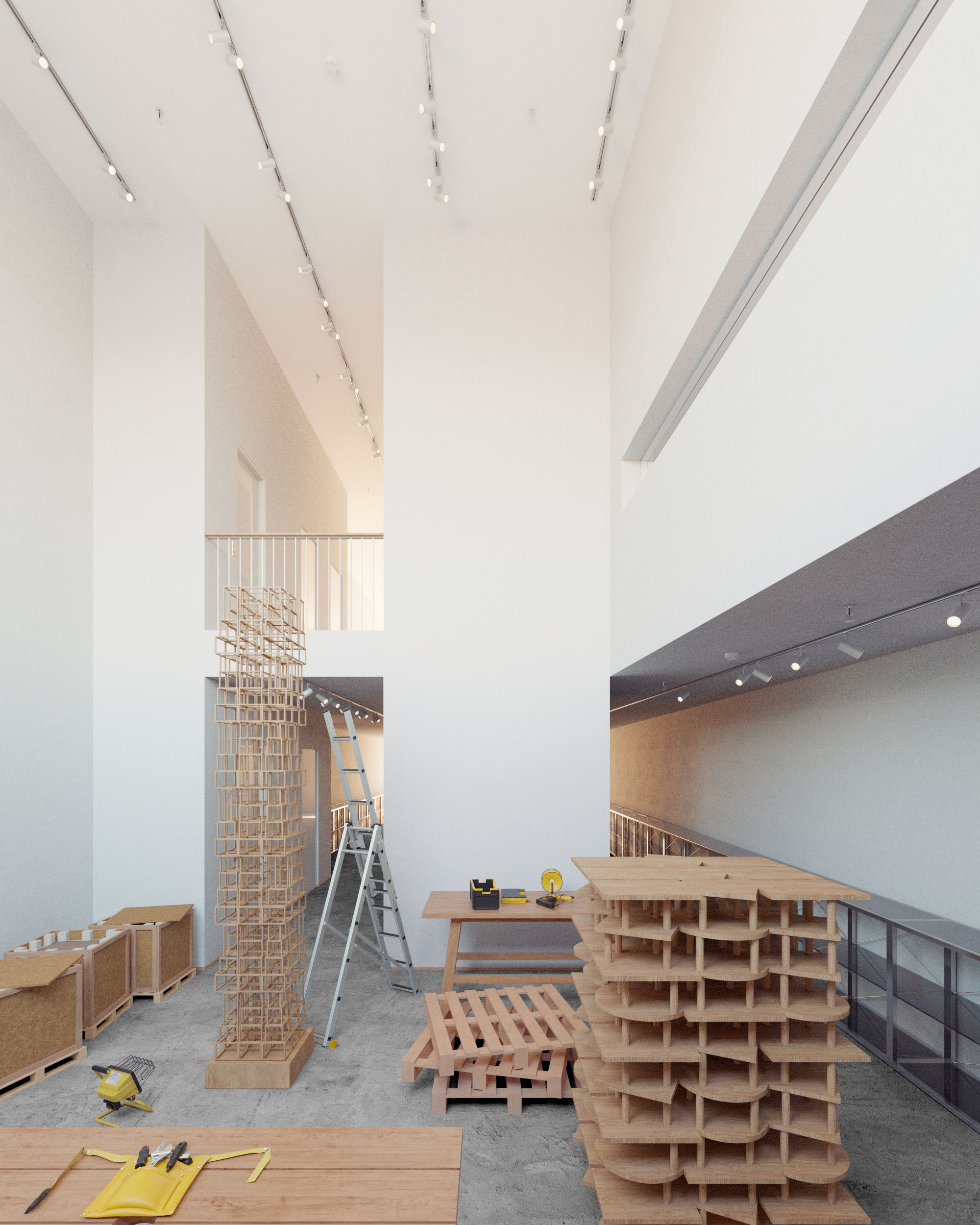
The commercial space occupies the basement and ground floor, featuring a two-story atrium at the front and a triangular courtyard at the rear that bring natural light into the lower level.
At ground level, an open-air corridor connects the front and back of the building, providing access across the site.
The units are organized to minimize enclosed rooms and prioritize open, shared living space.
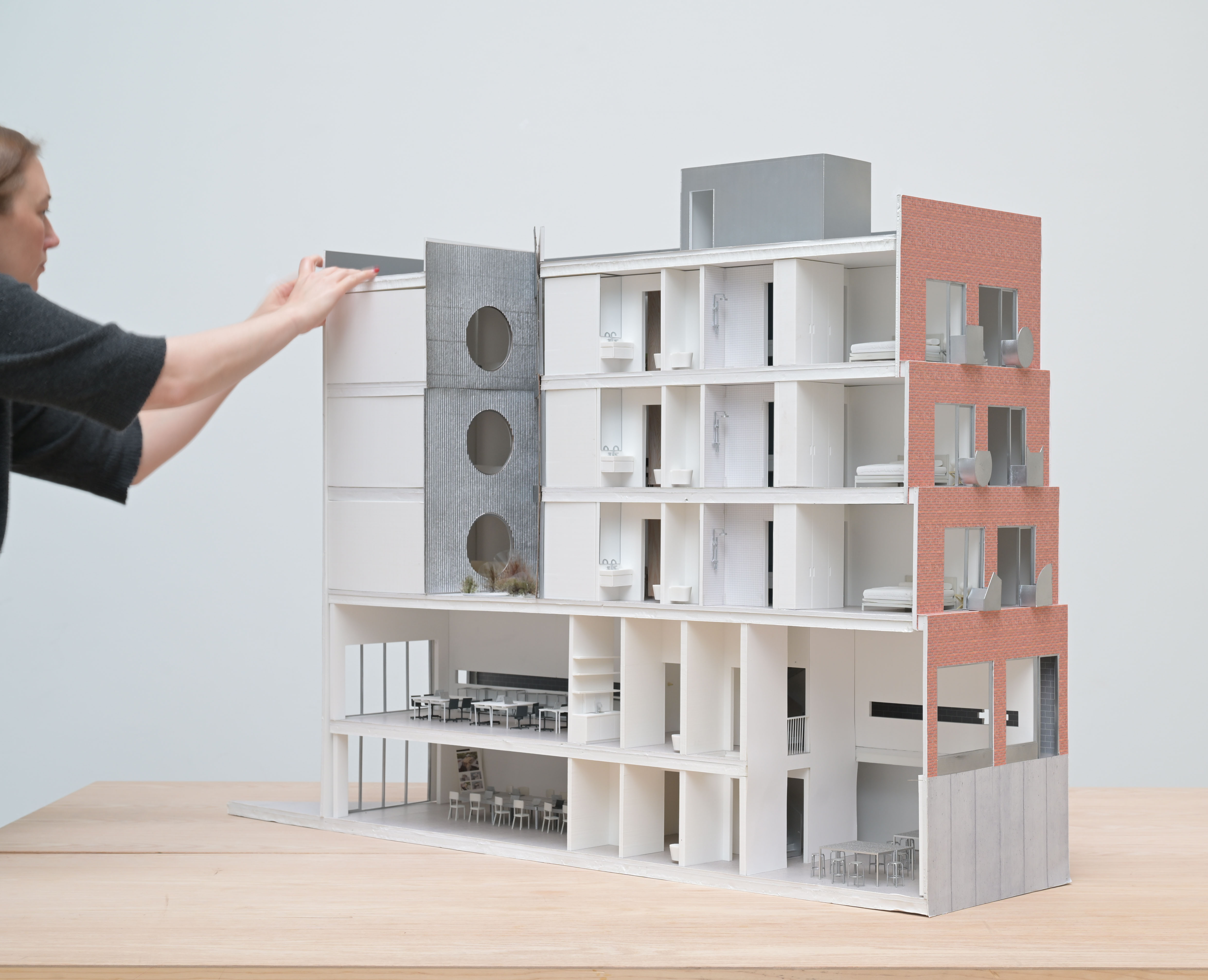
A large triangular atrium cuts through the residential units, creating a lightwell that brings daylight deep into the plan and establishes two additional facades.
A continuous view corridor connects the apartment from front to back, extending from the bedroom entry through a dual-purpose hall lined with vanities, past the kitchen, across the lightwell, and into the living room.
The project reconsiders the familiar elements of the Chicago three-flat, revealing new possibilities for light and openness.
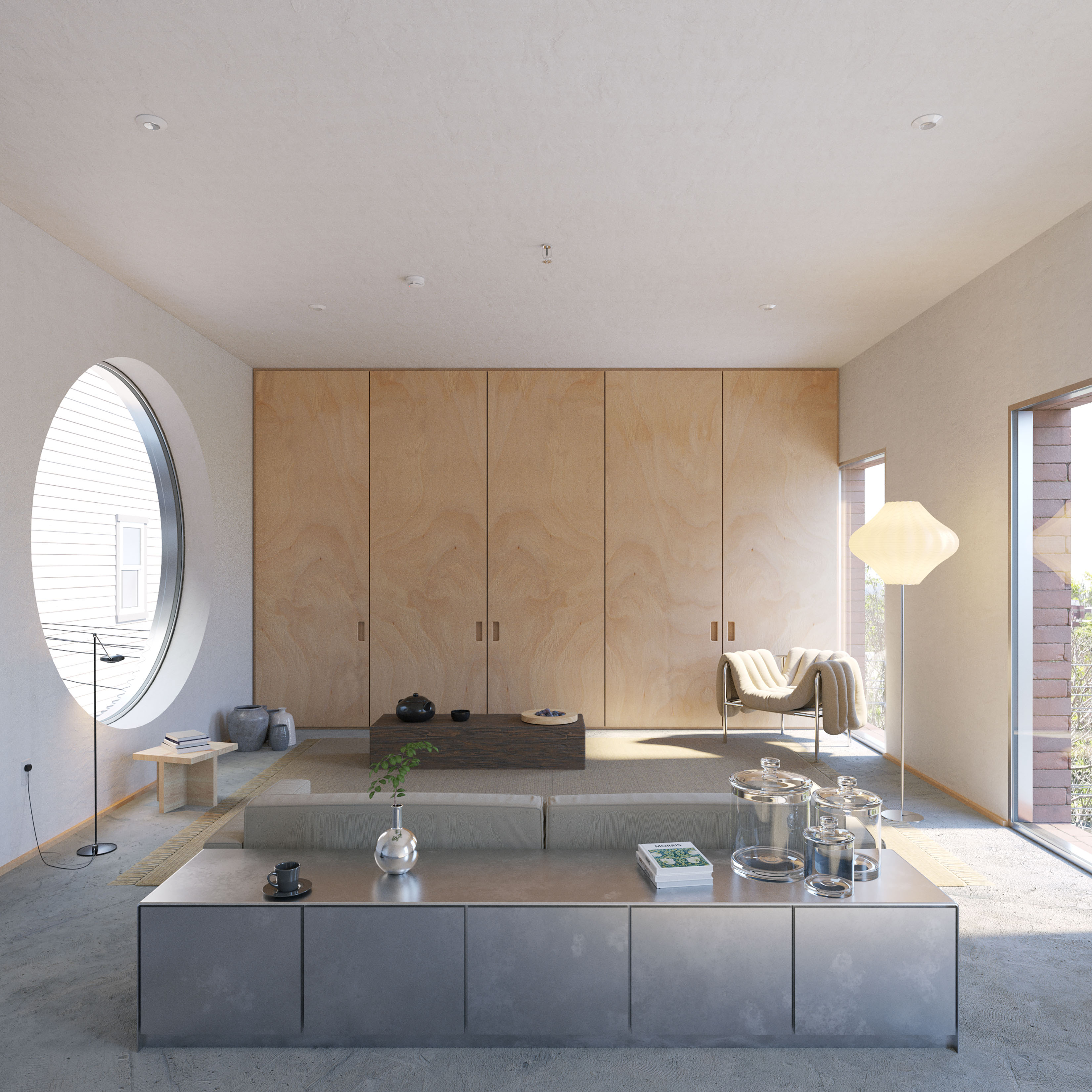
This project seeks to clarify the typology and expand its spatial potential for contemporary living.